
Trees
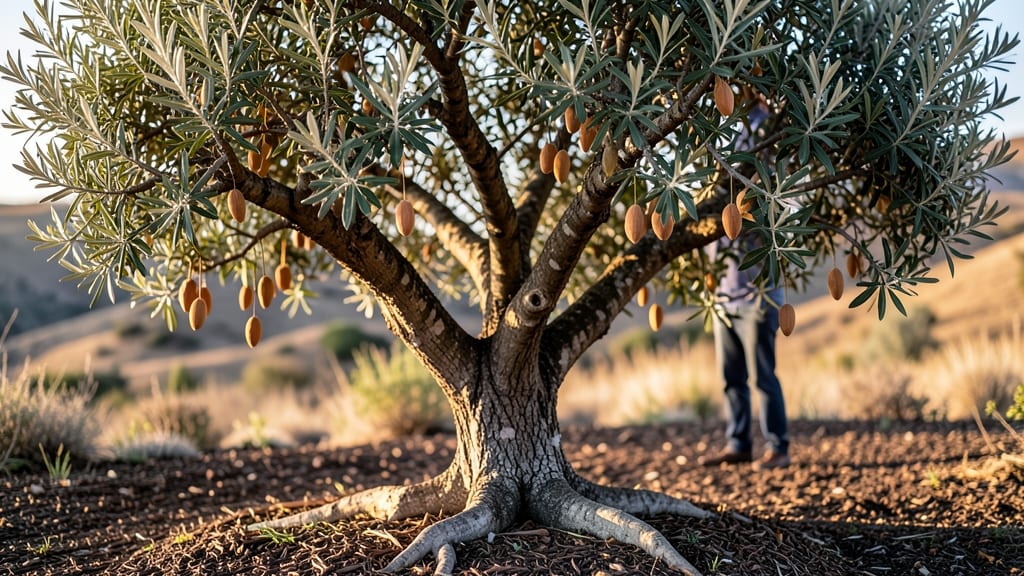
Almond trees grow to heights between 20 and 40 feet at maturity, with some varieties reaching even taller, depending on growing conditions and pruning practices.
That tiny almond sapling you planted last spring might seem harmless now, but give it a decade, and it could easily tower over your backyard fence—or even your two-story house!
Understanding how big an almond tree gets is the first step in deciding whether it belongs in your home garden or a larger orchard.
Most standard varieties like Nonpareil and Carmel can reach 30 feet or more, while dwarf varieties stay between 8 and 12 feet, making them ideal for smaller spaces. The difference in size isn’t just about aesthetics—proper spacing is critical to avoid overcrowding, poor airflow, and disease.
In this guide, you’ll learn how growth rates vary by age, which varieties fit your space, and how pruning can keep your almond tree in check—whether you’re dreaming of a backyard orchard or just want a manageable shade tree with a sweet harvest.
Mature almond tree height by variety: dwarf to standard sizes explained
Choosing an almond tree variety isn't just about flavor—it's about space planning. Standard varieties like Nonpareil can reach 25-30 feet tall, while dwarf options like Butte stay compact at 8-12 feet.
Your backyard layout depends entirely on which variety you select, so let's break down the key differences to help you decide.
Almond trees grow in three main size categories: dwarf, semi-dwarf, and standard. Each category offers unique benefits—dwarf varieties need less space but may produce smaller yields, while standard trees dominate your landscape but require careful pruning. Understanding these differences will help you avoid planting regrets.
If you're planting in a small backyard, dwarf varieties like Butte or Fritz are your best bet. These trees stay under 12 feet tall and work well in containers or tight spaces.
Just remember—dwarf trees often need a pollination partner to produce nuts, so plant at least two compatible varieties.
For home orchards with more space, semi-dwarf varieties like Carmel or Price strike a balance. They reach 14-18 feet but still fit in most suburban yards. These varieties are often self-pollinating, making them easier to manage for beginners.
Standard varieties like Nonpareil and Peerless are the giants of the almond world, reaching 25-30 feet tall. These are ideal for commercial orchards or large properties where you can dedicate space to proper tree spacing and maintenance. They require 20+ feet between trees to avoid overcrowding and disease.
One key factor that affects height is pruning practices. Even standard varieties can be kept smaller with regular pruning, though this may reduce fruit production. If you're growing almonds for home consumption, consider pruning to shape the tree while maintaining a manageable size.
Always prune during dormant season (late winter) for best results.
Your climate zone
How fast do almond trees grow? Growth rate by age and pruning impact
Almond trees start small but grow with surprising speed once established—though their early years are all about building a strong foundation. In their first year, expect just 1-2 feet of growth as roots establish deep in the soil.
This slow start is normal, but it’s critical for long-term health. Patience here pays off when your tree hits its growth stride in years 3-5, when 5-10 feet per year becomes the norm for standard varieties.
By year 5, most almond trees reach 10-15 feet tall, with their canopy spreading 12-18 feet wide. This rapid expansion phase is when pruning becomes your best friend—or your worst enemy if you skip it.
Without proper pruning, trees can grow wildly unbalanced, with dense canopies that block sunlight and invite pests. Think of pruning as traffic control for your tree’s growth, directing energy where you want it most.
Here’s what you need to know about their growth timeline and how to manage it:
- Year 1: 1-2 ft growth (focus on root development)
- Year 2: 3-5 ft (prune to open center for airflow)
- Year 3-5: 5-10 ft/year (critical pruning window)
- Year 6+: 20-40 ft (mature height, prune annually)
- Pruning Tip: Remove 20-30% of new growth yearly to maintain shape
- Seasonal Growth: Spring flush = fastest growth (March-May)
- Warning: Over-pruning = stunted growth; under-pruning = dense, disease-prone canopies
Seasonal growth patterns also play a huge role in managing your almond tree’s size. The spring flush (March-May) is when your tree puts on 70% of its annual growth. This is when you’ll see those dramatic height jumps if you’ve been pruning correctly.
Summer growth slows as the tree focuses on nut development, and fall/winter bring dormancy—perfect for your annual pruning session before buds swell in early spring.
Pruning isn’t just about keeping your tree small (though dwarf varieties benefit hugely from regular cuts). It’s about structural integrity. I’ve seen almond trees with one dominant leader branch that grows straight up like a flagpole, while all side branches struggle to compete.
The fix? Open-center pruning—removing competing vertical branches to create an open vase shape that lets sunlight penetrate to the center. This method also makes harvesting those elusive almonds so much easier.
For home gardeners working with limited space, dwarf varieties like ‘Nonpareil’ or ‘Carmel’ are game-changers. These stay under 12-18 feet tall even at maturity, but they still follow the same growth curve—just compressed. The key difference?
They’ll need more frequent pruning (every 6-12 months) to prevent overcrowding in their smaller canopies. Even with dwarfs, I recommend spreading pruning cuts over multiple seasons rather than doing one aggressive trim—your tree will thank you with better fruit production.
Remember, every almond tree is unique. Factors like soil quality, water availability, and local climate can shift growth rates by 20-30%. In my Zone 7a garden, trees grow about 10% faster than in cooler Zone 6a because of our longer growing season.
Pay attention to your tree’s individual growth habits and adjust your pruning schedule accordingly. With the right approach, you’ll have a healthy, productive almond tree that fits perfectly in your space—without stealing your neighbor’s fence space! 🌳