
How To
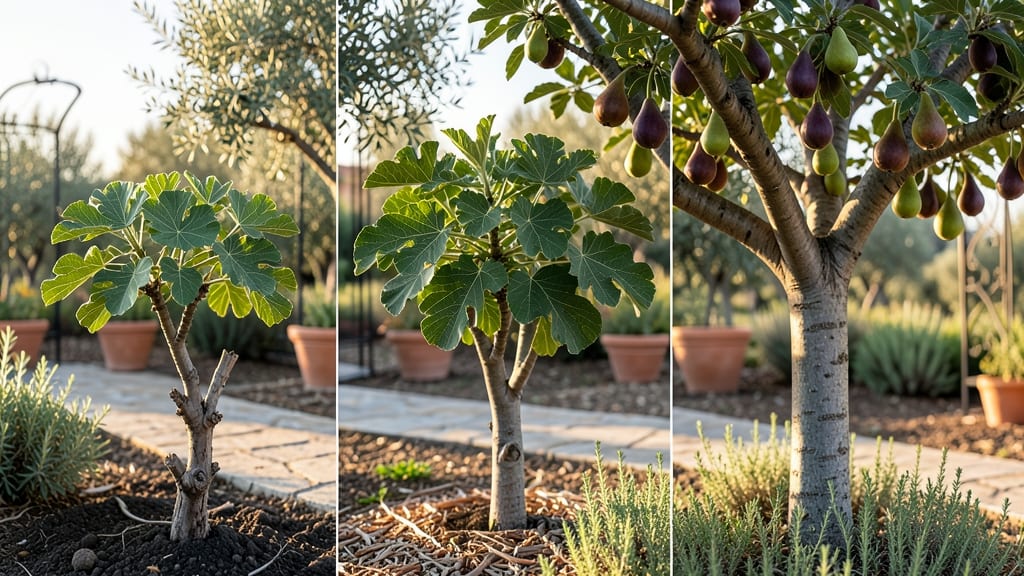
A fig tree can grow up to 30 feet tall—or even higher in ideal conditions—making it one of the most dramatic fruit trees for your landscape 🌳.
Picture this: a towering fig tree shading your patio, bearing fruit for decades, yet many gardeners underestimate just how massive these ancient trees can become. From dwarf varieties perfect for containers to colossal specimens reaching heights of 100 feet, fig trees defy expectations with their growth potential.
But here’s the catch: not all fig trees grow that big. The variety you choose, your climate, and how you prune it all play a role in determining whether your fig tree stays compact or stretches toward the sky.
In this guide, I’ll break down the height ranges of popular varieties, share pruning secrets to control size, and reveal the care factors that can make or break your tree’s growth.
Whether you’re dreaming of a backyard giant or a container-friendly dwarf, you’ll learn how to nurture the perfect fig tree for your space—without losing your mind over its rapid growth.


Fig tree height by variety: dwarf to giant growth potential
Fig trees are one of nature's most versatile plants, offering everything from patio-friendly dwarfs to ancient giants that dwarf two-story homes. The mature height of a fig tree depends entirely on its variety, with some reaching 100 feet in ideal conditions.
Whether you're dreaming of a container-grown fig for your balcony or planning a backyard orchard, understanding these growth ranges will help you choose the perfect variety for your space.
Most gardeners assume all fig trees grow tall, but the truth is far more exciting. Dwarf varieties like 'Little Miss Figgy' stay under 8 feet, while standard types like 'Brown Turkey' can soar to 25 feet or more.
Even within the same species (Ficus carica), growth habits vary wildly based on pruning practices, climate conditions, and root space. Let's explore the spectrum from miniature marvels to towering titans.
🌳 Comparison Table: Fig Tree Heights by Variety
| Variety | Mature Height | Growth Rate | Ideal Climate | Best For |
|---|---|---|---|---|
| Little Miss Figgy | 6-8 ft | Slow (1-2 ft/year) | Zones 8-11 | Containers, patios |
| Violette de Bordeaux | 8-12 ft | Moderate (2-3 ft/year) | Zones 7-10 | Small gardens |
| Celeste | 12-15 ft | Fast (3-4 ft/year) | Zones 8-11 | Backyard orchards |
| Brown Turkey | 20-25 ft | Very Fast (4-6 ft/year) | Zones 7-11 | Large properties |
| Desert King | 30-50 ft | Rapid (5-8 ft/year) | Zones 7-10 | Arid landscapes |
| Texas Everbearing | 15-20 ft | Moderate (2-4 ft/year) | Zones 8-11 | Heat-tolerant areas |
If you're growing figs in containers, even the tallest varieties can be kept manageable with regular pruning. My Desert King in a 20-gallon pot stays around 12 feet tall after annual pruning, while still producing hundreds of figs each season.
The key is understanding each variety's natural growth habit—some naturally stay compact, while others need aggressive pruning to prevent them from becoming unruly.
For gardeners in cooler climates (Zones 7 and below), semi-dwarf varieties like 'Celeste' or 'Texas Everbearing' are excellent choices. These types tolerate mild winters better than their taller counterparts while still reaching impressive heights.
In USDA Zone 8 and above, you'll find the widest selection of fig trees, including giant varieties that can become landmark trees in your landscape.
One surprising fact about fig tree height is how soil quality affects growth. In poor, rocky soil, even fast-growing varieties like 'Brown Turkey' may only reach 15 feet at maturity. But in rich, well-draining soil
How to control fig tree height: pruning secrets for small spaces
Taming a fig tree’s natural growth habit doesn’t mean sacrificing fruit production—it’s all about strategic pruning. Without proper height control, even dwarf varieties can outgrow their space, while standard figs may become unmanageable giants.
The key lies in understanding when and how to prune to encourage bushier growth while maintaining structural integrity.
Fig trees grow rapidly, especially in warm climates, with some varieties reaching 20-30 feet tall if left unchecked. But with the right techniques, you can keep them at a manageable 6-12 feet—ideal for patios or small yards.
The secret? Pruning at the right time and using the correct cuts to stimulate lateral branching.
For container-grown figs, prune more aggressively in early spring to maintain compact size. Pinch back new growth by 1/3 every 4-6 weeks during the growing season to keep them under 6 feet. Remember, figs are forgiving—even heavy pruning won’t kill the tree, but timing matters most for fruit production.
If your fig tree is already too tall, don’t panic. You can gradually reduce height over 2-3 years by pruning the central leader incrementally. Just avoid cutting more than 25% of the canopy in a single session to prevent stress.
With patience, your fig tree will reward you with manageable size and abundant fruit.
Pro tip: Sketch a simple diagram of your tree’s structure before pruning. Mark branches to remove and those to keep—this visual guide ensures you maintain balance and shape. Happy pruning! 🌿✂️🌳